In the rapidly evolving digital landscape of 2026, a perennial inquiry persists: "With a substantial social media following, is a supplementary digital presence truly necessary?" The conclusive answer is affirmative.
While social platforms serve as potent instruments for connectivity, they are subject to continuous modifications. To establish a brand with enduring permanence, a stable foundation is requisite—specifically, a professional website.
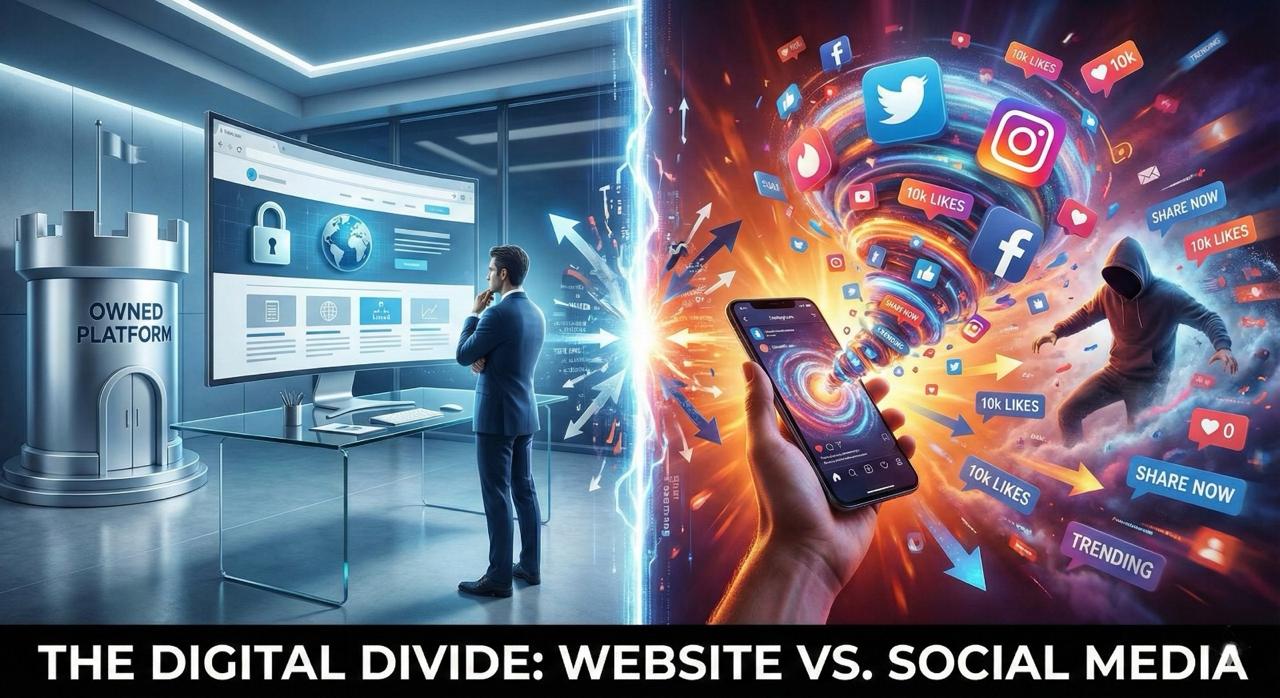
Consider the internet analogous to a thriving metropolis. Social media represents the crowded marketplace, ideal for public interaction, timely announcements, and tracking contemporary trends. It is dynamic and essential, yet it is simultaneously a noisy, leased domain. A website, conversely, constitutes the permanent, proprietary establishment. It functions as the measured, controlled environment where an audience can be invited to gain a comprehensive understanding of the entity, free from the intrusion of advertisements or algorithmic interference.
As we traverse 2026, the optimal strategy transcends a choice between the two. It necessitates the understanding that social media operates as the brand's voice, while the website serves as its core infrastructure. Contemporary success mandates the strategic equilibrium of leveraging social channels to generate traffic and utilizing the owned site to cultivate trust and ensure security.
1. The Rented Land Reality: Algorithm vs. Ownership
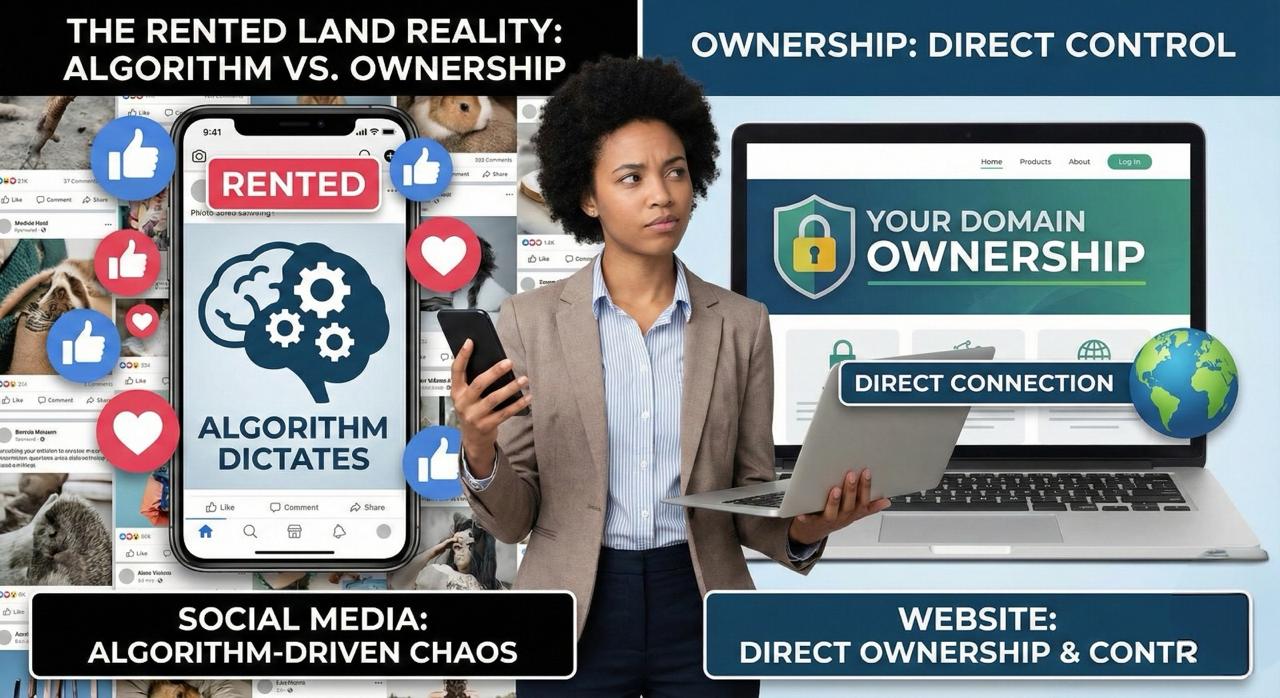
For the risk-aware business owner, waking up to a suspended social media account is a nightmare scenario. Relying solely on platforms like TikTok or Instagram is like building a business on rented land—the platform owns your audience, not you. When algorithms shift (and they always do), your visibility vanishes, threatening your stability. To survive in 2026, you need more than a profile; you need professional web development services.
Investing in custom web design and development creates a piece of "Digital Real Estate" you truly own. While social media is great for finding quick web design inspiration, it cannot offer the security of a dedicated site. By targeting stable keywords, your website ensures you stay visible on Google even when social feeds go dark.
Whether you are showcasing complex web development projects or striving to build one of the best portfolio websites in your niche, control is everything. The best website design is not just about aesthetics—it is about referencing authority and signaling that you are a permanent fixture, not a temporary trend.
Stop letting an algorithm decide your fate. Secure your digital deed today by launching a website you actually control.
2. The Trust Gap: Verification in the Age of AI

We’re living in a time where AI can create anything—faces, voices, reviews, even entire brands. Attention is cheap, but belief is not. This widening gap between visibility and credibility is the trust gap. In this climate, a real website becomes more than a digital asset—it becomes proof. Strong web design and development anchor your brand in reality, showing users that you exist beyond algorithms and automation.
Unlike social platforms, a website gives you space to demonstrate legitimacy. Showcasing real web development projects, clear service pages, and transparent processes helps visitors verify your expertise. This mirrors how trust has always been built—through evidence, consistency, and craftsmanship. People don’t just want promises anymore; they want receipts.
Intentional layouts driven by thoughtful web design inspiration—clean structure, fast performance, and human-centered storytelling—signal effort and authenticity. In an AI-heavy internet, effort stands out. Good design isn’t about trends; it’s about clarity, usability, and making people feel safe engaging with your brand.
That’s why serious businesses invest in professional web development services. A website is owned land, not rented space. Algorithms may change overnight, but a well-built site holds its ground. In the age of AI, trust belongs to brands that can be verified—and verification starts with the web.
3. The New Search: Discovery vs. Deep Answers

Search isn’t just about keywords anymore it’s about intent. People aren’t only looking to discover brands; they’re looking to understand them. In a world shaped by AI summaries and instant answers, shallow discovery fades fast. What lasts are platforms built for depth, and that’s where web design and development take center stage.
Social media sparks curiosity, but websites satisfy it. When users want clarity, they dig into structured pages, long-form content, and real web development projects that show how problems were solved, not just claimed. Deep answers require space, logic, and permanence—things feeds were never designed to offer.
Great search experiences are guided by clarity and trust. Drawing from proven web design inspiration, brands can create intuitive navigation, content hierarchies, and fast-loading pages that guide users from curiosity to confidence. In the age of AI search, usability isn’t optional—it’s how you stay visible.
That’s why brands serious about the future choose professional web development services. Discovery brings people to the door, but depth invites them inside. As search evolves, the winners won’t be the loudest—they’ll be the most useful, the most transparent, and the most well-built.
4. The Conversion Funnel: Attention vs. Action

Getting attention online is easy. Turning that attention into action is the real game. Likes, views, and clicks don’t pay the bills—decisions do. That’s why web design and development play a big role in the conversion funnel. A good website doesn’t just attract people; it guides them step by step toward taking action.
Social media grabs interest fast, but websites turn interest into trust. When visitors see clear services, smooth pages, and real web development projects, they feel confident. Confidence leads to action—filling a form, booking a call, or making a purchase. People move forward when things feel clear and real.
Simple layouts inspired by smart web design inspiration make decisions easier. Clean buttons, clear messages, fast loading, and easy navigation remove confusion. When users don’t have to think too much, they act faster. Good design is not about looking fancy—it’s about helping people move.
That’s why businesses invest in reliable web development services. Attention brings people in, but structure makes them stay and act. Algorithms may bring traffic, but a well-built website turns visitors into customers—and that’s where real growth happens.
5. Data Sovereignty: Followers vs. Email Lists

Followers feel powerful, but they don’t belong to you. Platforms own the data, control the reach, and change the rules whenever they want. That’s the risk. Real ownership starts with web design and development, where your data lives on systems you control, not on someone else’s app.
Social followers can disappear overnight. Email lists don’t. When your website collects emails through forms, downloads, or sign-ups, you build a direct line to your audience. Showing trust signals, clear privacy pages, and real web development projects makes people comfortable sharing their information. Ownership builds stability.
Smart layouts inspired by strong web design inspiration help users understand why they should subscribe. Simple forms, clear value, and honest messaging work better than tricks. People give their email when they feel respected, not rushed.
That’s why long-term brands choose professional web development services. Followers are borrowed attention. Email lists are owned relationships. In the long run, the brands that grow are the ones that control their data—and it all starts with a solid website.
"Social media creates the spark, but your website keeps the fire burning. Neglect either, and you leave money on the table."

